
Shop for a mechanical keyboard or a new keycap set and you will see two abbreviations everywhere: ABS and PBT. They are the two plastics almost every keycap is made from, and the choice affects how your keyboard feels, sounds and looks after a year of typing.
The short answer: PBT keycaps are harder, matte and resist shine, while ABS keycaps are smoother, easier to mould and usually cheaper, but develop a glossy shine with heavy use. Neither is automatically better. This guide explains the real differences in material, durability, sound, legends and price, with a comparison table, so you can decide which suits you.
What are ABS and PBT?
ABS (acrylonitrile butadiene styrene) is one of the most common plastics in the world, used in everything from LEGO bricks to car trim. It is an amorphous plastic with no true melting point; it softens around its glass transition of roughly 105 °C. ABS is easy to injection-mould with very little shrinkage, which is why most stock keycaps and many premium double-shot sets use it.
PBT (polybutylene terephthalate) is a semi-crystalline polyester engineering plastic, widely used for electrical connectors and housings. It melts at about 223–225 °C and is denser than ABS (around 1.31 g/cm³ versus about 1.05 g/cm³ for ABS). It resists heat and chemicals better, which also makes it ideal for dye-sublimated legends.
Other keycap plastics exist, such as POM (very smooth and slippery) and translucent PC (polycarbonate) for shine-through designs, but ABS and PBT cover the vast majority of keyboards. For a broader introduction, see what a mechanical keyboard is.
PBT vs ABS: quick comparison
| Factor | ABS keycaps | PBT keycaps |
|---|---|---|
| Surface feel | Smooth, slightly soft | Dry, textured, grippy |
| Shine over time | Develops a glossy shine on worn keys | Highly shine-resistant |
| Yellowing | Can yellow with UV exposure | Does not yellow like ABS |
| Sound | Higher-pitched, clackier | Deeper, more muted |
| Moulding | Easy, low shrinkage, rarely warps | Harder to mould; long keys can warp |
| Common legends | Double-shot, pad print, laser | Dye-sub, double-shot, laser |
| Colours | Vivid, glossy colours easy to achieve | Slightly muted colours |
| Typical price | Cheaper (budget stock caps) | Usually more expensive |
| Best for | Vivid colourways, budget boards, RGB shine-through | Long-term durability, textured feel |
Durability and shine
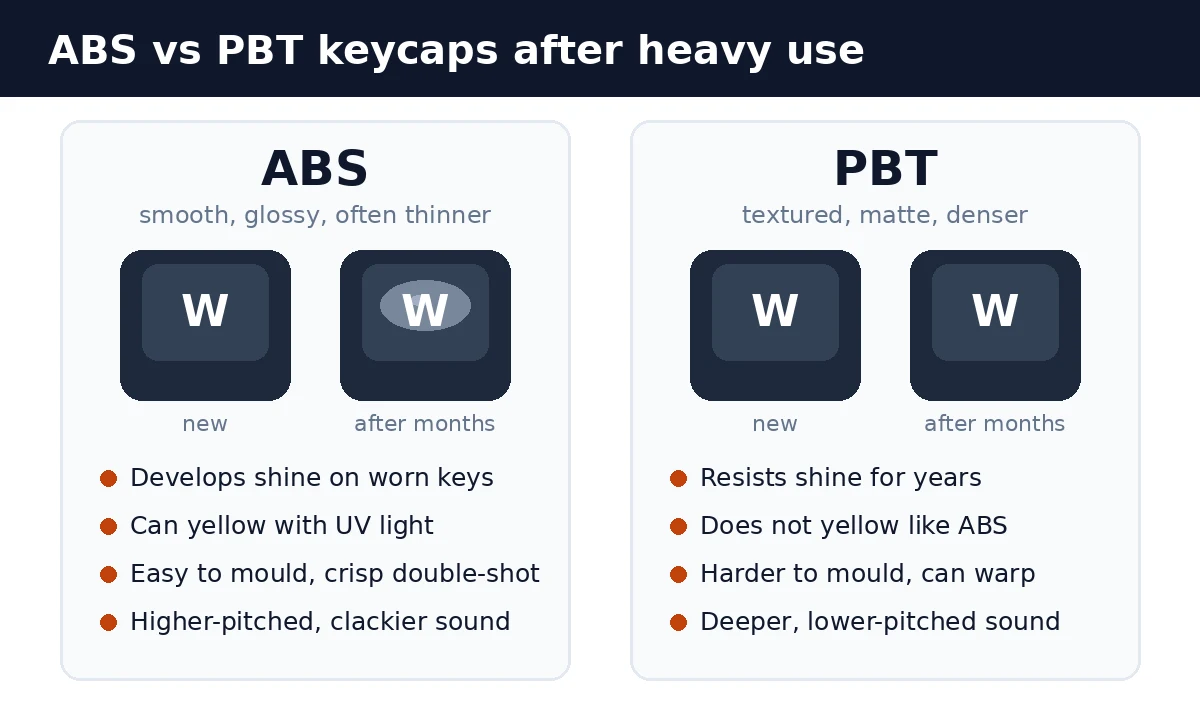
The biggest practical difference is shine. Over months of typing, the surface of ABS keycaps is gradually polished smooth, especially on the keys you hit most: Space, WASD, E and the home row. Worn ABS caps look oily and feel slicker, and the effect is most obvious on dark colours. How fast this happens depends on thickness and quality: cheap, thin ABS stock caps can shine within a few months, while thick premium ABS sets wear far more slowly.
PBT is harder and keeps its textured surface far longer, so PBT keycaps can look almost new after years of normal use. Be aware that some budget “PBT” sets are actually blends, which resist shine better than ABS but not as well as pure PBT.
Shine is cosmetic, not a failure. A shiny ABS keycap still works perfectly, and some people like the smooth, broken-in feel. But if you want a keyboard that looks factory fresh for a long time, PBT is the safer choice.
Yellowing
Light-coloured ABS can yellow over time with UV exposure, which is why many retro keyboards with beige or white ABS caps have turned yellow. PBT does not yellow the way ABS does, so white and light-grey PBT sets keep their colour longer.
Feel and sound
Out of the box, ABS keycaps feel smooth and slightly soft, while PBT feels dry, slightly rough and grippy. Many typists like PBT’s texture because fingers are less likely to slide off keys; others prefer the silky feel of fresh ABS.
Sound also differs. Because PBT is denser and caps are often thicker, PBT keycaps typically produce a deeper, more muted sound, while ABS tends to sound higher-pitched and clackier. Keycap thickness, profile, switch type, plate and case all have a big influence too, so the material is only one part of a keyboard’s sound. If you’re tuning sound, also read about lubing keyboard switches and the Cherry MX switch family.
Legends: double-shot vs dye-sub vs printed
How the letters are applied matters as much as the plastic. There are three main methods:
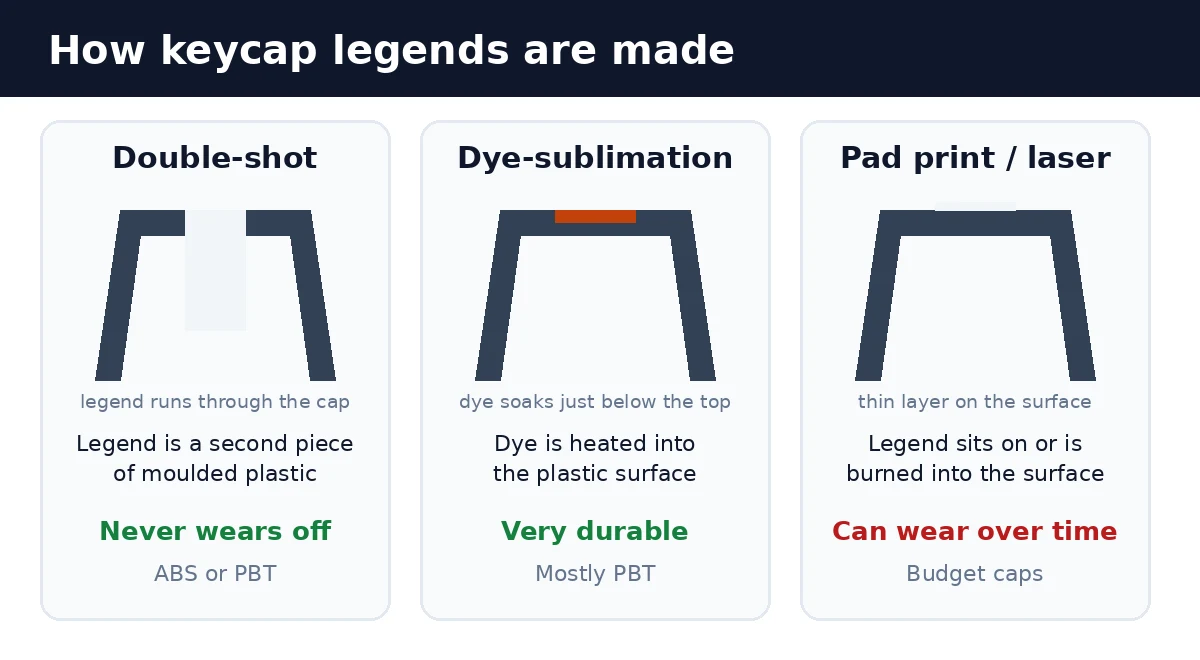
- Double-shot: the keycap is moulded from two separate shots of plastic, one for the legend and one for the body. The legend is a solid piece of plastic, so it can never wear off. ABS is the traditional double-shot material because it shrinks very little; double-shot PBT exists but is harder to make cleanly.
- Dye-sublimation: heat drives dye into the plastic surface, so the legend is part of the cap rather than a layer on top. It is almost always used on PBT, which handles the heat well, and allows detailed multi-colour artwork. Standard dye-sub can only print legends darker than the cap; light-on-dark sets need reverse dye-sub.
- Pad printing and laser etching: common on budget keyboards. Printed legends sit on the surface and can wear away; laser-etched legends last longer but can fade or look less crisp.
For RGB keyboards, look for shine-through keycaps, where the legend is translucent so the backlight shows through. Shine-through is not automatic for any method, and many double-shot and dye-sub sets use opaque legends.
Manufacturing, warping and colour
ABS’s low shrinkage makes it forgiving to mould, so long keys like the space bar come out straight. PBT is trickier: it can warp as it cools, so a long PBT space bar may have a slight bend. That is why some sets mix PBT alphas with an ABS space bar.
ABS also reaches bright, saturated and glossy colours more easily, which is why many of the most famous enthusiast colourways are double-shot ABS. PBT colours tend to look slightly more muted, and getting accurate dark colours with light legends is harder.
Price
Most cheap keyboards ship with thin ABS keycaps because they are inexpensive to produce. Decent PBT sets usually cost more than budget ABS, but premium double-shot ABS sets can be among the most expensive keycaps you can buy. In other words, price tracks quality and manufacturing method more than the plastic alone.
Which should you choose?
Choose PBT if
- You type a lot and want keycaps that look new for years
- You prefer a textured, grippy feel
- You like a deeper, more muted sound
- You want light colours that won’t yellow
Choose ABS if
- You want vivid, glossy colourways or a specific enthusiast set
- You want crisp double-shot legends at a lower price
- You prefer a smooth surface and brighter sound
- You need shine-through legends on a budget RGB board
Many good keyboards now ship with double-shot PBT, which combines PBT’s shine resistance with legends that never fade. If your current caps are shiny, upgrading is easy on any board with standard MX-style stems. Browse our picks for the best custom keycaps, and if you’re curious about the hobby side, read our custom keycaps guide.
Thickness matters as much as material
Wall thickness is the hidden factor in keycap quality. Thin keycaps (often around 1 mm on budget boards) shine faster, sound hollower and flex more, whether they are ABS or PBT. Thicker keycaps (around 1.4–1.5 mm or more on good sets) feel more solid, sound deeper and wear more slowly. A thick, high-quality ABS set can outlast a thin, cheap PBT one, so check the stated thickness, not just the plastic.
Thickness also changes sound noticeably. If you want a quieter, deeper-sounding board, thick PBT keycaps are one of the easiest upgrades, alongside the tips in our guide to making a keyboard quieter.
How to tell if your keycaps are PBT or ABS
- Check the listing or manual. Manufacturers almost always advertise PBT because it is a selling point. If the material isn’t mentioned, the keycaps are usually ABS.
- Feel the surface. PBT feels dry and slightly gritty; new ABS feels smooth and slightly glossy.
- Look at your most-used keys. If Space, WASD or the home row look shinier than the rest after months of use, they are almost certainly ABS.
- Compare weight and sound. PBT is denser, so a PBT cap of the same thickness is slightly heavier and sounds lower when tapped.
Swapping keycaps is simple with a keycap puller; see how to remove keys from a keyboard before you start. Popular boards like those in our best 75% keyboards and best hot-swappable keyboards guides all accept standard MX-style keycaps, but check the layout and size so bottom-row keys fit.
How to care for your keycaps
Whatever the material, clean keycaps regularly with warm water and mild soap, then dry them completely before reinstalling. Avoid very hot water and harsh solvents. PBT handles heat and chemicals better than ABS, but neither needs aggressive cleaning. Our keyboard cleaning guide walks through the full process.
FAQ
Is PBT better than ABS?
For durability and shine resistance, yes. PBT stays matte and does not yellow like ABS. But ABS is easier to mould, offers more vivid colours and crisp double-shot legends, and is usually cheaper, so the better choice depends on what you value.
Do ABS keycaps get shiny?
Yes. ABS keycaps gradually develop a glossy shine on the most-used keys. Thin, cheap ABS can shine within months; thick premium ABS lasts much longer.
Are PBT keycaps louder?
Usually not. PBT keycaps tend to sound deeper and more muted, while ABS sounds higher-pitched. Thickness, profile, switches and case matter too.
What is double-shot PBT?
Double-shot PBT keycaps use two moulded pieces of PBT, one for the legend and one for the body. You get PBT’s shine resistance plus legends that never wear off.
Can I tell PBT from ABS by touch?
Often. PBT feels dry and slightly textured, while new ABS feels smooth and slightly glossy. Worn ABS is noticeably slick and shiny.
Will PBT keycaps fit my keyboard?
Material doesn’t affect fit. What matters is the stem (most mechanical keyboards use MX-style cross stems) and the layout, especially the bottom row sizes.
The bottom line
PBT is the better choice for long-term durability, a textured feel and a deeper sound. ABS wins for vivid colours, smooth feel and crisp double-shot legends at a lower price, at the cost of shine over time. If you’re unsure, double-shot or dye-sub PBT is a safe, long-lasting default for most typists.
